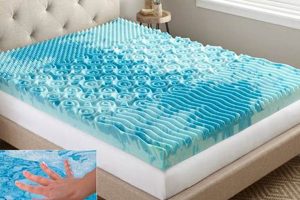
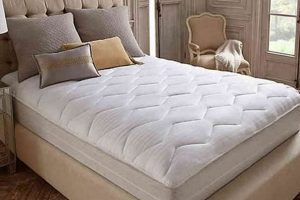
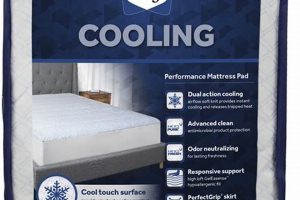
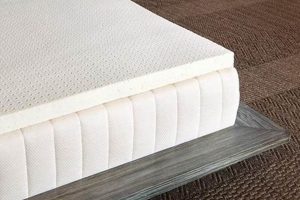
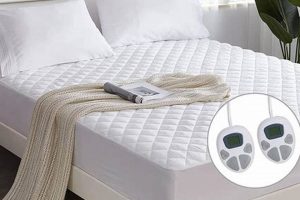
A mattress pad serves as a protective layer placed atop a mattress, designed to enhance comfort and guard against spills, stains, and general wear. These pads commonly consist of materials like cotton, polyester, or specialized blends, offering varying degrees of cushioning and protection. For example, a quilted cotton pad can provide a soft, breathable surface, while a waterproof version safeguards against liquid damage.
Maintaining a clean sleeping environment is crucial for hygiene and overall well-being. Regular cleaning of this protective layer extends the lifespan of the mattress, preventing the accumulation of dust mites, allergens, and odors. Failure to properly care for this bedding component can lead to premature mattress degradation, potentially necessitating replacement sooner than expected. Furthermore, a clean surface promotes better sleep quality.
The following sections will detail the recommended procedures for laundering this bedding item, encompassing pre-wash preparation, washing machine settings, drying methods, and specific considerations for different material types.
Helpful Hints for Maintaining a Mattress Pad
The longevity and effectiveness of a mattress pad depend on proper care and cleaning techniques. Adhering to the following suggestions ensures optimal performance and extends the lifespan of this bedding accessory.
Tip 1: Always consult the manufacturer’s care label before initiating any cleaning process. The label provides specific instructions regarding water temperature, detergent type, and drying methods suitable for the material composition.
Tip 2: Pre-treat any visible stains before placing the pad in the washing machine. Employ a mild stain remover or a solution of diluted detergent, gently blotting the affected area. Avoid harsh chemicals that may damage the fabric.
Tip 3: Utilize a gentle cycle on the washing machine. This reduces the risk of abrasion and preserves the integrity of the padding. Select a cold or warm water setting, as indicated by the care label.
Tip 4: Employ a mild, hypoallergenic detergent. Harsh chemicals and excessive fragrance can irritate sensitive skin and potentially damage the pad’s fibers. Consider a detergent specifically designed for delicate fabrics.
Tip 5: Tumble dry on low heat or opt for air drying whenever possible. High heat can shrink or warp the material, particularly for pads containing synthetic fibers. Ensure the pad is completely dry before placing it back on the mattress to prevent mildew growth.
Tip 6: For pads with significant soiling or odors, consider a second wash cycle with a cup of baking soda added to the wash. Baking soda acts as a natural deodorizer and can help to lift stubborn stains.
Tip 7: Regularly inspect the pad for signs of wear and tear, such as rips, tears, or thinning. Addressing these issues promptly can prevent further damage and extend the pad’s lifespan.
Following these recommendations will contribute to a cleaner, more comfortable sleeping environment, ensuring the mattress pad continues to effectively protect and enhance the mattress.
The subsequent sections will provide further guidance on specific situations and cleaning challenges that may arise during the maintenance process.
1. Check care label.

Prior to initiating any laundering process, careful examination of the care label affixed to the mattress pad is paramount. This action represents the foundational step in appropriate maintenance, directly influencing the outcome of the cleaning procedure and the preservation of the item’s integrity.
- Material Composition Determination
The care label provides crucial information regarding the specific materials used in the construction of the mattress pad. This knowledge dictates the selection of appropriate detergents, water temperatures, and drying methods. For instance, a pad containing down or feathers requires specialized cleaning agents and a delicate drying process to prevent clumping or damage, whereas a polyester blend may be more tolerant of higher temperatures.
- Washing Temperature Guidelines
Recommended water temperatures are explicitly stated on the care label. Adhering to these guidelines is essential to prevent shrinkage, color fading, or structural damage. High temperatures can degrade certain fabrics, while excessively low temperatures may not effectively remove stains or allergens. The care label provides the optimal temperature range for effective cleaning without compromising the material.
- Detergent Restrictions
The care label may specify limitations regarding the type of detergent that should be used. Certain detergents contain harsh chemicals or enzymes that can damage specific fibers or coatings. For example, bleaching agents should be avoided on colored fabrics or pads with waterproof membranes. The label serves as a guide to selecting detergents that are compatible with the pad’s construction.
- Drying Instructions
The care label provides explicit instructions regarding appropriate drying methods. Tumble drying may be permitted on low heat, or air drying may be recommended to prevent shrinkage or damage. High heat can melt synthetic fibers or distort the shape of the pad. Following the drying instructions ensures the pad retains its original size and shape and that any waterproof or stain-resistant coatings are not compromised.
In summary, consulting the care label before engaging in any washing procedure is an indispensable element in successfully cleaning a mattress pad. It provides the necessary information to tailor the cleaning process to the specific needs of the item, maximizing cleaning effectiveness while minimizing the risk of damage. Ignoring the care label can lead to irreversible damage, reduced lifespan, and compromised performance of the mattress pad.
2. Gentle detergents advised.

The recommendation for gentle detergents is directly intertwined with the proper method for laundering a mattress pad. The selection of an appropriate cleaning agent is not merely a matter of preference but a critical factor influencing the material’s integrity and longevity. Harsh detergents often contain concentrated chemicals, enzymes, or bleaching agents that can degrade the fibers of the pad, leading to premature wear, discoloration, or structural damage. In contrast, gentle detergents, formulated with milder ingredients, effectively cleanse the pad while minimizing the risk of such damage. A practical example involves a mattress pad constructed with a delicate microfiber or wool filling. Using a harsh detergent could strip the natural oils from these fibers, causing them to become brittle, lose their loft, and potentially clump together, rendering the pad less comfortabl
e and supportive. The careful use of gentle detergents constitutes a fundamental aspect of effective care.
The significance of this advice extends beyond the immediate wash cycle. Repeated exposure to harsh chemicals can weaken the pad’s overall structure, making it more susceptible to tears, punctures, and seam separation. Furthermore, residue from harsh detergents can remain embedded within the fibers, potentially causing skin irritation or allergic reactions for the sleeper. Gentle detergents, conversely, are designed to rinse cleanly, leaving minimal residue and reducing the likelihood of adverse skin responses. Consider the scenario of a child with sensitive skin sleeping on a mattress pad repeatedly washed with a harsh detergent. The residual chemicals could trigger eczema or other skin conditions, disrupting sleep and requiring medical intervention. The long-term health and well-being implications underscore the vital role of gentle detergents.
In conclusion, the advisory to use gentle detergents is not a suggestion but an integral component of the process. It directly impacts material preservation, prolongs the lifespan of the item, reduces the risk of skin irritation, and contributes to a healthier sleeping environment. While alternative cleaning agents may offer perceived benefits, the potential for damage and adverse health effects associated with harsh detergents outweighs any marginal advantages. Therefore, diligent adherence to the use of gentle detergents represents a foundational principle in the successful and safe maintenance of a mattress pad.
3. Mild cycle essential.

The designation of a mild cycle as essential within the process of laundering a mattress pad reflects the need to balance effective cleaning with the preservation of the item’s structural integrity. The implementation of a gentler wash setting mitigates several risks inherent in more aggressive cleaning methods.
- Fiber Protection
Aggressive wash cycles, characterized by rapid agitation and high spin speeds, can exert excessive stress on the fibers composing the mattress pad. This stress can lead to fiber breakage, weakening of seams, and a general reduction in the pad’s overall durability. A mild cycle, with its reduced agitation and slower spin, minimizes these risks, preserving the fiber structure and prolonging the life of the pad. For example, a mattress pad containing delicate natural fibers like cotton or wool is particularly susceptible to damage from harsh washing, necessitating a mild cycle to maintain its texture and loft.
- Padding Integrity
Many mattress pads incorporate internal padding materials, such as foam or fiberfill, designed to enhance comfort and support. Vigorous wash cycles can cause these materials to shift, clump, or compress unevenly, diminishing their intended function. A mild cycle provides a gentler treatment, reducing the likelihood of displacement or distortion of the internal padding. An illustrative example is a quilted mattress pad; a harsh cycle could unravel the quilting stitches and displace the internal batting, rendering the pad lumpy and uncomfortable.
- Waterproof Membrane Preservation
Certain mattress pads feature a waterproof membrane, often made of polyurethane, designed to protect the mattress from spills and stains. Harsh wash cycles, particularly those involving high heat or aggressive detergents, can compromise the integrity of this membrane, leading to cracks, delamination, or a loss of waterproof properties. A mild cycle, coupled with appropriate water temperature and detergent selection, helps to preserve the waterproof barrier. A practical instance is a mattress pad marketed for incontinence protection; the effectiveness of its waterproof layer would be significantly diminished by repeated exposure to aggressive washing conditions.
- Reduced Wrinkling
Intense washing and spinning action can cause significant wrinkling in the mattress pad material. Excessive wrinkles not only detract from the pad’s appearance but can also make it difficult to properly fit on the mattress. A mild cycle, with its reduced agitation, typically results in less wrinkling, simplifying the process of reinstalling the pad after laundering. A mattress pad made from a tightly woven cotton blend, for example, will exhibit fewer wrinkles after a gentle wash compared to a more forceful cleaning process.
These interconnected facets highlight the importance of selecting a mild cycle when laundering a mattress pad. The adoption of a gentle approach safeguards the materials, protects the padding, preserves waterproof features (if present), and minimizes wrinkling, ultimately contributing to the sustained performance and longevity of the bedding accessory. Ignoring this guideline increases the probability of accelerated degradation, diminished functionality, and the need for premature replacement.
4. Low heat drying.

The application of low heat drying in the context of mattress pad maintenance is a crucial element in preserving the material integrity and prolonging the useful lifespan of the item. The drying process, if improperly executed, can negate the benefits of appropriate washing techniques.
- Fiber Preservation
High heat can compromise the structural integrity of various fibers commonly found in mattress pads, including cotton, polyester, and specialized blends. Excessive heat can cause shrinkage, distortion, and a loss of loft, particularly in pads containing natural fibers or synthetic fills. Low heat drying minimizes these risks by gently removing moisture without subjecting the materials to damaging temperatures. For example, a mattress pad with a down alternative fill will retain its fluffy texture and insulating properties more effectively when dried at a low temperature.
- Waterproof Membrane Protection
Many mattress pads incorporate a waterproof membrane, often made of polyurethane, to protect the underlying mattress from spills and stains. High heat can degrade this membrane, causing it to crack, delaminate, or lose its waterproof properties. Low heat drying helps to maintain the integrity of the waterproof barrier, ensuring that the pad continues to provide effective protection. A mattress pad designed for use by individuals with incontinence, for instance, relies on the continued functionality of its waterproof layer, which is best preserved through low-heat drying practices.
- Elasticity Maintenance
Mattress pads often feature elasticized edges or corner straps designed to secure the pad to the mattress. High heat can cause these elastic components to lose their elasticity, rendering them less effective at holding the pad in place. Low heat drying preserves the elasticity of these components, ensuring a snug and secure fit. A mattress pad with elastic corner straps will maintain its ability to grip the mattress corners more effectively when dried at a low temperature.
- Prevention of Residue Setting
If detergent residue remains on the mattress pad after washing, high heat can cause this residue to become permanently set into the fibers, potentially causing skin irritation or discoloration. Low heat drying allows for more gradual evaporation, minimizing the risk of residue setting. A mattress pad washed with a heavily fragranced detergent will be less likely
to retain a strong odor if dried at a low temperature.
These considerations underscore the significance of employing low heat drying methods following the laundering of a mattress pad. This practice protects the materials, preserves waterproof features (if present), maintains elasticity, and minimizes the risk of residue setting, ultimately contributing to the sustained performance and longevity of the bedding accessory. Deviation from this guideline increases the potential for damage and diminished functionality, potentially necessitating premature replacement.
5. Stain pre-treatment.

Stain pre-treatment constitutes a critical preparatory step in the effective laundering of a mattress pad. Addressing stains prior to the primary washing process significantly enhances the likelihood of complete stain removal and minimizes the potential for permanent discoloration or damage to the pad’s materials.
- Targeted Stain Removal
Pre-treatment allows for focused application of cleaning agents directly to the affected area. This targeted approach maximizes the concentration and dwell time of the cleaning solution on the stain, increasing its effectiveness. For instance, a mattress pad with a localized blood stain benefits from direct application of a cold water and hydrogen peroxide solution prior to being placed in the washing machine. This targeted treatment prevents the stain from setting and improves the chances of complete removal during the wash cycle.
- Prevention of Stain Spreading
Washing a stained mattress pad without pre-treatment can lead to the spreading of the stain to a larger area of the fabric. The agitation and water action within the washing machine can cause the stain to diffuse, making it more difficult to remove. Pre-treating the stain confines the cleaning process to the immediate area, preventing its expansion. A scenario involving a spilled beverage on a mattress pad illustrates this point; immediate pre-treatment prevents the liquid from soaking further into the fibers during washing.
- Material Compatibility Assessment
Pre-treatment provides an opportunity to test the compatibility of the cleaning agent with the mattress pad’s material. Applying a small amount of the chosen cleaning solution to an inconspicuous area of the pad allows for observation of any adverse reactions, such as discoloration or fabric damage. This assessment prevents widespread damage that could occur if an incompatible cleaning agent were used throughout the entire washing process. Before addressing a stain on a delicate wool mattress pad, spot-testing the pre-treatment solution ensures that it will not harm the fibers.
- Enhanced Washing Efficiency
By removing or significantly reducing the intensity of stains prior to washing, pre-treatment enhances the overall efficiency of the laundering process. The washing machine is then able to focus on removing general soil and allergens from the mattress pad, rather than struggling with stubborn stains. A mattress pad with pre-treated urine stains requires less aggressive washing, reducing the wear and tear on the fabric and potentially saving water and energy.
The integration of stain pre-treatment as a preliminary step in the cleaning of a mattress pad optimizes stain removal, prevents stain spreading, facilitates material compatibility assessment, and enhances washing efficiency. This proactive approach contributes to a cleaner, fresher, and more durable mattress pad, maximizing its protective and comfort-enhancing functions.
6. Regular cleaning necessary.

The directive “Regular cleaning necessary” is inextricably linked to the effective execution of proper mattress pad maintenance. Infrequent laundering precipitates the accumulation of various contaminants, impacting hygiene, allergen control, and the lifespan of the bedding accessory. This connection operates on a fundamental cause-and-effect principle; the failure to perform routine cleaning results in a progressive build-up of undesirable substances, whereas consistent cleaning mitigates these accumulations. As such, scheduled laundering is not merely an optional consideration but an essential component in preserving the utility and promoting the hygienic properties of the mattress pad.
Consider the accumulation of dust mites and their associated allergens. These microscopic organisms thrive in bedding environments, feeding on shed skin cells. Infrequent cleaning allows their populations to proliferate, potentially triggering allergic reactions and respiratory issues in susceptible individuals. Similarly, the accumulation of body oils, sweat, and spilled fluids creates a breeding ground for bacteria and fungi, leading to unpleasant odors and potential staining. Regular laundering, using appropriate techniques as defined within the framework of proper washing procedures, effectively removes these contaminants, maintaining a cleaner and healthier sleeping surface. Another practical example is the regular washing of a child’s mattress pad; frequent accidents necessitate more regular cleaning to prevent staining and odor retention. The frequency of cleaning should align with usage patterns and potential exposure to contaminants, adhering to the principle that timely intervention prevents substantial build-up.
In summary, the understanding of “Regular cleaning necessary” as an integral aspect of proper maintenance is critical for sustained hygiene, allergen control, and extended lifespan. The challenges associated with infrequent cleaning, such as allergen proliferation, odor development, and potential material degradation, underscore the importance of incorporating scheduled laundering into bedding maintenance routines. The successful execution of appropriate cleaning procedures, driven by the recognition of this necessity, promotes a healthier and more comfortable sleeping environment.
7. Inspect for damage.
The directive to inspect for damage directly influences the appropriate methodology for laundering a mattress pad. A pre-wash assessment identifies vulnerabilities that could be exacerbated by the cleaning process. Tears, rips, or weakened seams, if undetected, may worsen during washing and drying, resulting in more extensive damage or rendering the pad unusable. For example, a small tear along a seam could unravel completely during a wash cycle, requiring significant repair or replacement. Identifying pre-existing damage allows for informed decisions regarding washing techniques and the implementation of preventative measures.
This inspection dictates the suitability of machine washing versus hand washing. A mattress pad with minor damage might withstand a gentle hand-washing process, avoiding the rigorous agitation of a washing machine. Conversely, a pad with extensive damage might be deemed unsuitable for any washing process and require professional cleaning or disposal. Furthermore, the presence of certain types of damage influences the choice of cleaning agents. A pad with a compromised waterproof membrane requires a milder detergent to prevent further degradation. Similarly, stains near damaged areas require careful pre-treatmen
t to avoid enlarging the tear or weakening the surrounding fabric. This connection demonstrates the practical application of damage assessment in tailoring the washing procedure.
In summation, the directive to inspect for damage is an inseparable element in the process. This assessment guides the selection of appropriate washing methods, the choice of cleaning agents, and the implementation of preventative measures, ensuring the mattress pad is cleaned effectively without sustaining further harm. Neglecting this step can lead to exacerbated damage, compromising the pad’s functionality and shortening its lifespan.
Frequently Asked Questions
The following addresses common inquiries regarding the proper cleaning procedures for mattress pads. These questions are designed to provide clarity and guidance on best practices.
Question 1: How frequently should a mattress pad be laundered?
The optimal laundering frequency depends on usage and exposure to contaminants. Generally, washing every one to two months is advisable. However, more frequent cleaning may be necessary for individuals with allergies, those who perspire heavily, or in households with pets or children. Visible stains or odors also necessitate immediate cleaning.
Question 2: Can all mattress pads be machine washed?
While many mattress pads are machine washable, consulting the manufacturer’s care label is crucial. Certain materials or constructions may require hand washing or professional cleaning. Attempting to machine wash a pad that is not designed for it can lead to damage.
Question 3: What water temperature is recommended for washing a mattress pad?
The care label provides specific temperature recommendations. In general, cold or warm water is preferred to prevent shrinkage or damage to the fibers. Hot water may be suitable for some fabrics, but should only be used if explicitly permitted by the manufacturer.
Question 4: Is bleach safe to use on a mattress pad?
The use of bleach is generally discouraged, as it can damage certain fabrics and cause discoloration. If necessary, a diluted bleach solution may be used on white cotton pads, but only if the care label permits it. Color-safe bleach alternatives are recommended for colored fabrics.
Question 5: How should a mattress pad be dried?
Low heat tumble drying or air drying are the preferred methods. High heat can cause shrinkage, warping, or damage to the padding. If tumble drying, use a delicate cycle and remove the pad promptly. Air drying should be done in a well-ventilated area, avoiding direct sunlight.
Question 6: What should be done if a mattress pad has a strong odor after washing?
A persistent odor may indicate inadequate rinsing or incomplete drying. Rewashing the pad with a cup of baking soda added to the detergent can help to neutralize odors. Ensure the pad is completely dry before placing it back on the mattress to prevent mildew growth.
Adhering to these guidelines ensures proper cleaning and maintenance of mattress pads, promoting hygiene, comfort, and longevity.
The subsequent section will provide information on specific product recommendations.
Maintaining Cleanliness and Longevity
This exploration of effective mattress pad laundering techniques underscores several critical points. Regular cleaning, appropriate detergent selection, gentle wash cycles, and low-heat drying practices are essential for preserving material integrity, preventing allergen accumulation, and ensuring a hygienic sleep environment. Pre-treatment of stains and careful inspection for damage prior to washing contribute significantly to prolonging the lifespan of the bedding accessory.
Adherence to these guidelines will contribute to a cleaner, more comfortable, and healthier sleep experience. Consistent and informed care extends the useful life of the mattress pad, safeguarding the underlying mattress and promoting overall well-being. The adoption of these procedures represents a worthwhile investment in long-term comfort and hygiene.