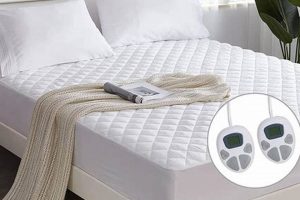
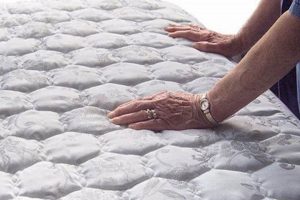
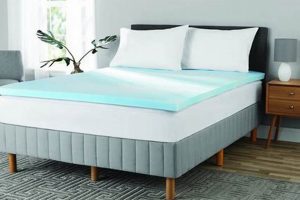
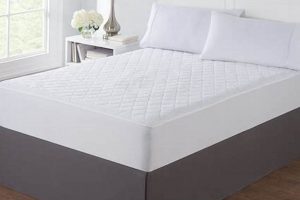
A cushioning layer, typically made of latex foam, that is placed on top of a mattress to enhance comfort, support, and overall sleep quality is being examined. Such products are frequently chosen to modify the feel of an existing mattress, adding softness, firmness, or pressure relief. For example, a consumer might select one to alleviate back pain or to make a too-firm mattress more comfortable.
The utilization of these overlays can significantly impact sleep hygiene. Latex, a natural material, is often favored for its breathability, durability, and resistance to dust mites and allergens. These characteristics contribute to a cooler and healthier sleep environment. Historically, such bedding accessories were developed to extend the lifespan of mattresses and to provide customizable comfort options without necessitating a full mattress replacement.
The following will explore key considerations in selecting a suitable latex mattress overlay, including factors such as latex type, thickness, density, and potential benefits for various sleep needs and preferences.
Selecting a Suitable Latex Mattress Overlay
To maximize the potential benefits of a latex mattress overlay, careful consideration of several key factors is essential. These tips are designed to guide informed decision-making.
Tip 1: Determine the Appropriate Thickness: Latex overlays are available in various thicknesses, typically ranging from 1 to 4 inches. Thicker overlays provide more significant contouring and pressure relief, while thinner options offer a subtle adjustment to the mattress’s feel.
Tip 2: Consider Latex Density: Density, measured in pounds per cubic foot (PCF), influences the firmness and durability. Higher density overlays are generally firmer and more resilient, offering greater support and longevity.
Tip 3: Evaluate Latex Type: Options include Dunlop and Talalay latex. Dunlop is denser and firmer, produced through a simpler process. Talalay is softer and more breathable, resulting from a more complex manufacturing process.
Tip 4: Assess Support Needs: Individuals with back pain or joint discomfort should prioritize overlays that offer adequate support and pressure point relief. Side sleepers often benefit from softer overlays that contour to the body.
Tip 5: Check for Certifications: Look for certifications such as Oeko-Tex or Eco-Institut, indicating the latex overlay has been tested for harmful substances and meets specific environmental standards.
Tip 6: Evaluate Breathability: Latex’s natural breathability is a significant advantage. Ensure the overlay’s construction allows for adequate airflow to prevent heat buildup and promote a comfortable sleep temperature.
Tip 7: Consider Cost Versus Longevity: Latex overlays represent a range of price points. Investing in a higher-quality, denser overlay may prove more cost-effective in the long term due to its extended lifespan and sustained performance.
By carefully considering these factors, consumers can select a latex mattress overlay that optimally addresses their individual comfort and support requirements.
This guidance provides a foundation for a more detailed exploration of specific latex overlay models and brands.
1. Material Quality

Material quality is a primary determinant of a latex mattress overlay’s performance and longevity. The type of latex usedwhether natural, synthetic, or a blenddirectly impacts its durability, comfort, and overall value. Natural latex, derived from the sap of rubber trees, exhibits superior elasticity, breathability, and resistance to degradation compared to synthetic alternatives. For example, an overlay made from 100% natural Dunlop latex is likely to provide consistent support and comfort for a longer period than one constructed from a synthetic latex blend, which may compress or break down more quickly. The presence of impurities or fillers in lower-quality latex can also compromise its inherent properties, leading to reduced comfort and a shorter lifespan.
The manufacturing process also plays a crucial role in material quality. Dunlop and Talalay are the two primary methods. Dunlop latex tends to be denser and firmer, while Talalay often results in a softer, more breathable product. The choice of process affects not only the feel of the overlay but also its resistance to sagging and indentation over time. A latex overlay with verifiable certifications from organizations like Oeko-Tex or Eco-Institut ensures it has been tested for harmful substances, including volatile organic compounds (VOCs), further emphasizing the importance of material selection. Such certifications provide assurance of product safety and quality, aligning with the standards expected of a premium sleep product.
Ultimately, material quality is foundational to the overall effectiveness of a latex mattress overlay. Opting for a high-quality, certified natural latex product contributes to enhanced sleep comfort, extended product lifespan, and a reduced risk of exposure to harmful chemicals. Conversely, compromising on material quality can lead to diminished comfort, premature wear, and potential health concerns. Therefore, prioritizing material quality is essential when selecting a latex mattress overlay.
2. Density Options

Density, measured in pounds per cubic foot (PCF), constitutes a critical specification for a latex mattress overlay. The density rating directly influences the overlay’s firmness, support capabilities, and durability. Higher density latex provides greater resistance to compression, resulting in a firmer feel and enhanced support, particularly beneficial for individuals requiring spinal alignment or experiencing back pain. Conversely, lower density latex exhibits a softer, more conforming characteristic, often preferred by side sleepers seeking pressure relief. The selection of an appropriate density directly contributes to the overall comfort and suitability of the overlay.
Different density options cater to varying sleep preferences and body weights. An individual weighing over 200 pounds might benefit from a higher density latex overlay to prevent excessive sinking and maintain adequate support. Conversely, a lighter individual may find a lower density overlay more comfortable, allowing for optimal contouring without feeling overly firm. Furthermore, couples with differing sleep preferences or body weights might consider a split-density latex overlay to accommodate individual needs. The interplay between density and body weight is pivotal in achieving optimal comfort and support, impacting sleep quality and potentially alleviating pressure points.
Therefore, understanding density options is indispensable when selecting a latex mattress overlay. Ignoring this factor can lead to discomfort, inadequate support, and premature degradation of the product. By carefully considering density in relation to individua
l sleep needs and body characteristics, consumers can make informed decisions, maximizing the potential benefits of a latex mattress overlay for enhanced sleep quality and long-term satisfaction. Choosing an appropriate density ensures the overlay effectively complements the existing mattress, providing a customized sleep experience.
3. Thickness Range
Thickness range in a latex mattress overlay is a critical determinant of its influence on the overall sleep experience. The thickness of the latex layer dictates the degree to which the overlay can modify the existing mattress’s characteristics, affecting pressure relief, support, and motion isolation. A thinner overlay, typically ranging from 1 to 2 inches, provides a subtle adjustment to the mattress’s feel, primarily enhancing surface comfort. A thicker overlay, between 3 and 4 inches, offers a more significant alteration, contouring to the body and providing more pronounced pressure relief. For instance, an individual seeking to soften a firm mattress would likely benefit from a thicker overlay, while someone desiring only a slight improvement in comfort might opt for a thinner one. Thickness also relates to the overlay’s ability to isolate motion; thicker options tend to dampen movement more effectively, reducing disturbances for sleep partners.
The practical significance of understanding the thickness range lies in its direct impact on sleep quality and overall satisfaction with the mattress system. Consider the scenario where a consumer purchases a mattress that is too firm for their liking. A thinner latex overlay may provide minimal relief, leading to continued discomfort. Conversely, a thicker overlay, while providing ample cushioning, could potentially lead to a feeling of being overly enveloped, especially for individuals who prefer a firmer sleep surface. Furthermore, the thickness of the overlay affects the overall height of the bed, which is an important consideration for ease of entry and exit, particularly for individuals with mobility limitations. The interplay between thickness and body weight is also relevant; heavier individuals typically require thicker overlays to prevent bottoming out and ensure adequate support.
In summary, the thickness range of a latex mattress overlay is a primary factor in determining its suitability for individual sleep needs. Careful consideration of thickness, in conjunction with other factors such as latex density and the existing mattress’s properties, is essential for achieving optimal comfort and support. A thorough understanding of this relationship allows consumers to make informed decisions, maximizing the potential benefits of a latex mattress overlay for enhanced sleep quality. Failure to adequately consider thickness can lead to dissatisfaction and negate the potential advantages of using such a product.
4. Support Level

Support level, in the context of latex mattress overlays, directly correlates with spinal alignment, pressure distribution, and overall sleep posture. The selection of an overlay with an appropriate support level is paramount to experiencing the purported benefits of such bedding accessories.
- Firmness and Spinal Alignment
The firmness of a latex overlay dictates the degree to which it maintains natural spinal curvature. An overly soft overlay may allow the sleeper to sink too deeply, leading to spinal misalignment and potential back pain. Conversely, an overly firm overlay may not conform sufficiently to the body’s contours, resulting in pressure points and discomfort. The optimal support level aligns the spine in its natural position, regardless of sleep posture.
- Density and Weight Distribution
The density of the latex material influences its capacity to distribute weight evenly across the sleep surface. Higher density overlays typically provide greater support, preventing concentrated pressure on areas such as the hips and shoulders. Even weight distribution reduces the likelihood of pressure sores and improves circulation. The support level, as defined by density, is especially relevant for individuals with higher body mass.
- Sleeping Position and Support Requirements
Different sleeping positions necessitate varying support levels. Side sleepers generally require a softer overlay to accommodate the curvature of the spine, while back and stomach sleepers may benefit from a firmer surface that prevents excessive sinking in the pelvic region. The support level should adapt to the individual’s preferred sleep position to promote optimal spinal alignment and minimize discomfort.
- Thickness and Overall Support
Overlay thickness also influences support. Thicker overlays generally provide greater support and pressure relief, while thinner options offer a more subtle adjustment. Consider that thicker options typically contour to the body more effectively, supporting natural curves and alleviating pressure points, while thinner options are more suitable for those seeking a gentle adjustment to their mattress without drastically altering its feel or support. Selecting the appropriate thickness, in conjunction with material density, helps ensure the optimal support level is achieved.
The interplay between firmness, density, sleeping position, and thickness culminates in the support level offered by a latex mattress overlay. A properly selected overlay enhances the comfort and health benefits of the sleeping environment, while an inappropriate choice can exacerbate existing issues or create new ones. Consequently, a comprehensive assessment of individual needs is essential when determining the ideal support level in this context.
5. Breathability

Breathability is a crucial attribute impacting the overall performance and user satisfaction of a latex mattress overlay. Its significance stems from the material’s capacity to facilitate air circulation, regulating temperature and reducing moisture accumulation during sleep. The inherent cellular structure of latex, particularly in varieties like Talalay, promotes airflow, allowing heat to dissipate rather than becoming trapped. This contributes to a cooler, more comfortable sleep environment, minimizing the likelihood of night sweats and temperature-related sleep disturbances. For example, individuals residing in warmer climates or those prone to overheating during sleep often find enhanced comfort when using a breathable latex overlay.
The breathability of a latex overlay directly influences its hygiene and longevity. Adequate air circulation helps prevent the buildup of moisture, which can foster the growth of mold, mildew, and bacteria within the mattress. This is especially relevant for individuals with allergies or sensitivities to dust mites, as a drier sleep surface inhibits their proliferation. Moreover, reduced moisture prolongs the lifespan of the overlay by minimizing the risk of material degradation. Consider the contrasting scenario where a non-breathable overlay traps moisture, leading to a less hygienic sleep environment and a potential decrease in the product’s lifespan. The selection of a breathable latex overlay, therefore, represents an investment in both sleep quality and product durability.
In conclusion
, breathability is an integral component of a high-quality latex mattress overlay, directly affecting temperature regulation, hygiene, and product longevity. A failure to prioritize breathability can lead to discomfort, reduced product lifespan, and potential health concerns related to moisture accumulation. Therefore, assessing the breathability of a latex overlay is essential for informed decision-making and maximizing the potential benefits of this sleep-enhancing product. Prioritizing breathability helps to ensure a comfortable and healthy sleep environment.
6. Durability
Durability constitutes a primary factor in evaluating the suitability of a latex mattress overlay. The inherent characteristics of latex, both natural and synthetic variations, influence its resistance to degradation over time, directly impacting its lifespan and sustained performance. A durable latex overlay maintains its structural integrity, providing consistent support and comfort for an extended period. Conversely, an overlay with poor durability may compress or break down prematurely, leading to diminished comfort and a reduced lifespan. The selection of a latex overlay with robust durability represents a long-term investment in sleep quality and overall bedding value.
Natural latex, particularly when processed using the Dunlop method, often exhibits greater durability than synthetic latex or blended materials. The density of the latex also contributes significantly; higher density overlays are generally more resistant to compression and sagging. Real-world examples demonstrate that a high-quality, high-density natural Dunlop latex overlay can maintain its shape and support characteristics for upwards of ten years, while a lower-quality synthetic alternative may begin to show signs of wear within a few years. The practical significance of understanding durability lies in avoiding the need for frequent replacements, thereby reducing long-term costs and minimizing environmental impact. Selecting a durable option ensures consistent performance and support, directly enhancing sleep quality.
In summary, durability is an indispensable attribute of a latex mattress overlay, influencing its lifespan, sustained performance, and overall value. Prioritizing durability through the selection of high-quality materials and appropriate density levels ensures a long-term investment in sleep comfort and bedding longevity. Challenges in assessing durability often lie in the lack of standardized testing and transparent product information; however, focusing on reputable brands, verifiable certifications, and detailed material specifications can mitigate these challenges. Recognizing the importance of durability aligns with the broader theme of selecting bedding accessories that offer both immediate comfort and lasting value, optimizing the sleep environment for long-term well-being.
7. Certification

Third-party verification through certification programs serves as a crucial indicator of product quality and safety for latex mattress overlays. These certifications provide consumers with assurance that the overlay meets specific standards regarding material composition, manufacturing processes, and environmental impact, which in turn informs purchasing decisions.
- Oeko-Tex Standard 100
This certification verifies that the latex overlay has been tested for harmful substances, including volatile organic compounds (VOCs), pesticides, and heavy metals. An Oeko-Tex certification indicates that the product is safe for human contact and reduces the risk of allergic reactions or skin irritation. For example, a latex overlay bearing this label assures consumers that it will not off-gas potentially harmful chemicals into the sleep environment.
- Eco-Institut
The Eco-Institut certification focuses on indoor air quality and ensures that the latex overlay emits minimal levels of VOCs and other pollutants. This certification is particularly relevant for individuals with respiratory sensitivities or those concerned about the potential health effects of chemical emissions from bedding materials. A real-world scenario would involve a consumer choosing a certified overlay to minimize exposure to airborne toxins, contributing to a healthier sleep environment.
- GOLS (Global Organic Latex Standard)
GOLS certification applies specifically to natural latex products and verifies that the latex is derived from organically grown rubber trees and processed according to stringent environmental and social standards. This certification ensures traceability throughout the supply chain, from the plantation to the finished product. A consumer seeking an environmentally responsible option would prioritize a GOLS-certified latex overlay, supporting sustainable farming practices.
- CertiPUR-US
While not specific to latex, CertiPUR-US certification is relevant for blended latex overlays containing polyurethane foam. This certification verifies that the foam components have been tested for harmful chemicals and meet specific standards for emissions, content, and durability. This ensures that even blended latex overlays adhere to baseline safety and environmental criteria.
Certification labels provide a transparent and verifiable means for consumers to assess the safety and quality of latex mattress overlays. By prioritizing certified products, purchasers can mitigate risks associated with harmful chemicals, environmental concerns, and substandard manufacturing processes, contributing to a more informed and confident decision when selecting a latex mattress overlay.
Frequently Asked Questions Regarding Latex Mattress Overlays
The following addresses common inquiries and clarifies potential misconceptions about latex mattress overlays, focusing on factors pertinent to their selection and use.
Question 1: What distinguishes natural latex from synthetic latex in mattress overlays?
Natural latex is derived from the sap of rubber trees, offering superior elasticity, breathability, and durability compared to synthetic latex, which is petroleum-based. Natural latex is also less prone to off-gassing and generally considered more environmentally friendly.
Question 2: How does the density of a latex mattress overlay influence its performance?
Density, measured in pounds per cubic foot (PCF), dictates the firmness and support provided by the overlay. Higher density latex is firmer and offers greater support, while lower density latex is softer and more conforming. The ideal density depends on individual sleep preferences and body weight.
Question 3: What is the recommended thickness for a latex mattress overlay, and how does it impact comfort?
Thickness ranges typically from 1 to 4 inches. Thicker overlays offer more substantial pressure relief and contouring, while thinner options provide a subtle enhancement to the existing mattress’s feel. Selection should be based on the desired level of comfort adjustment.
Question 4: What certifications should be considered when purchasing a latex mattress overlay?
Certifications such as Oeko-Tex Standard 100, Eco-Institut, and GOLS (Global Organic Latex Standard) verify that the overlay has been tested for harmful substances, meets specific environmental standards, and is made from organically sourced latex, respectively.
Question 5: How does a latex mattress overlay contribute to temperature regulation during sleep?
The open-cell structure of latex promotes airflow, allowing heat to dissipate and preventing moisture accumulation. This breathability helps regulate temperature, creating a cooler and more comfortable sleep environment.
Question 6: What factors affect the durability and lifespan of a latex mattress overlay?
Durability is influenced by the type of latex (natural vs. synthetic), density, and manufacturing process. Higher quality, denser natural latex overlays generally last longer and maintain their support characteristics for a more extended period.
Selecting the most suitable latex mattress overlay requires careful consideration of these factors to ensure optimal comfort, support, and value.
The subsequent sections will explore specific product comparisons and purchasing recommendations.
Conclusion
The preceding analysis has examined the key attributes and considerations involved in selecting a suitable latex mattress overlay. Factors such as material quality, density options, thickness range, support level, breathability, durability, and certification have been identified as critical determinants of product performance and consumer satisfaction. Understanding these interwoven elements is essential for making informed decisions that align with individual sleep needs and preferences.
Given the significance of sleep quality for overall well-being, the selection of a latex mattress overlay should be approached with diligence and a focus on objective product characteristics. Further research into specific models and brands is encouraged to optimize the selection process and ensure a worthwhile investment in improved sleep and long-term bedding value.