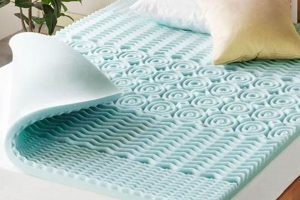
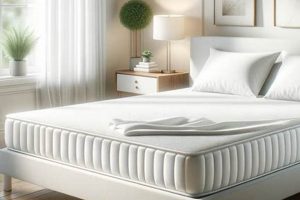
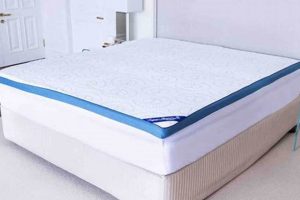
A cushioning layer designed to be placed atop an existing sleeping surface to modify its firmness and feel, particularly addressing beds that provide insufficient support. This addition aims to enhance comfort and improve the overall sleep experience for individuals who find their current bed too yielding.
The strategic placement of such an item can significantly influence sleep quality by alleviating pressure points and promoting proper spinal alignment. Historically, less sophisticated solutions, such as extra blankets, were employed to achieve similar outcomes. Modern versions offer advanced materials and construction techniques to deliver targeted support and temperature regulation, contributing to a more restful night.
The following sections will delve into the various types of materials used in their construction, factors to consider when selecting the appropriate option, and methods for maintaining and extending its lifespan.
Practical Considerations for Addressing an Overly Soft Sleeping Surface
The selection and utilization of an appropriate overlay can substantially improve the comfort and support provided by a yielding bed. Careful consideration of several factors is crucial to achieving the desired outcome.
Tip 1: Prioritize Density. Seek out materials with a higher density rating. Increased density generally translates to firmer support and enhanced durability, preventing premature sagging and maintaining consistent performance over time.
Tip 2: Evaluate Material Options. Memory foam, latex, and wool offer distinct characteristics. Memory foam conforms closely to the body, latex provides resilient support and breathability, and wool offers natural temperature regulation. The optimal choice depends on individual preferences and specific needs.
Tip 3: Assess Thickness. The thickness of the overlay directly impacts its ability to alter the bed’s feel. A thicker profile will generally provide more noticeable firming, while a thinner option may offer subtle adjustments. Choose a thickness appropriate for the degree of support needed.
Tip 4: Consider Firmness Level. Overlays are available in varying degrees of firmness, typically categorized as soft, medium, or firm. Select a firmness level that effectively counteracts the softness of the existing bed without creating an excessively rigid sleeping surface.
Tip 5: Account for Body Weight and Sleeping Position. Individuals with higher body weights may require denser and thicker options for adequate support. Side sleepers may benefit from a slightly softer overlay to alleviate pressure on the shoulders and hips, while back and stomach sleepers generally require firmer support.
Tip 6: Research Cooling Properties. Overheating can disrupt sleep. Opt for materials known for their breathability and cooling properties, such as open-cell memory foam or latex, to maintain a comfortable sleep temperature.
Tip 7: Inspect Construction Quality. Look for well-constructed options with durable stitching and quality materials. A well-made overlay will withstand regular use and maintain its integrity over time.
Implementing these guidelines will facilitate the selection of an appropriate overlay, resulting in a more supportive and comfortable sleeping environment. Improved sleep quality can positively impact overall well-being.
The subsequent sections will explore the long-term maintenance and care strategies necessary to preserve the investment in this sleep enhancement.
1. Increased firmness
Increased firmness, when directly related to mattress overlays designed for yielding sleeping surfaces, constitutes the primary objective. The selection and application of these overlays center on counteracting the inadequate support provided by an overly soft bed, ultimately aiming to improve sleep quality and spinal alignment.
- Material Density and Composition
The density of the materials used directly dictates the degree of firmness added. Higher density foams, such as latex or high-density memory foam, resist compression and offer substantial support. For example, a 4-pound density memory foam topper will offer significantly more resistance than a 2-pound density version, resulting in a firmer feel. Material composition also matters; latex is naturally firmer and more resilient than conventional memory foam.
- Thickness and Layer Construction
The thickness of the overlay significantly impacts its ability to augment firmness. Thicker options, typically ranging from 3 to 4 inches, provide a more pronounced change in the overall sleeping surface feel. Layer construction, incorporating multiple layers of varying densities, allows for a targeted approach to increasing support in specific areas while maintaining a degree of comfort. This is important to consider based on the person preference.
- Support Zone Integration
Certain overlays feature integrated support zones, designed to provide focused reinforcement in areas such as the lumbar region. These zones employ variations in density or contouring to promote proper spinal alignment and alleviate pressure points. For instance, a topper with a firmer central zone can prevent excessive sinking in the midsection, particularly beneficial for back sleepers.
- Impact on Pressure Distribution
While the primary goal is to increase firmness, the overlay must also effectively distribute pressure to prevent localized discomfort. A topper that is excessively firm without proper contouring can create pressure points, leading to restless sleep. Balancing firmness with pressure-relieving properties is crucial for optimal comfort. Pressure mapping evaluations are sometimes used to assess the pressure distribution qualities.
The aforementioned aspects underscore that “increased firmness” as it relates to addressing the inadequacies of a yielding bed involves a multi-faceted approach. Selecting the appropriate overlay necessitates careful consideration of material density, thickness, zoned support features, and the overall impact on pressure distribution. These factors, when properly addressed, contribute to a more supportive and comfortable sleep environment.
2. Supportive Material
The efficacy of a sleeping surface enhancement in addressing the deficiencies of an overly soft mattress hinges predominantly on the characteristics of the materials employed in its construction. These materials dictate the degree of firmness, pressure relief, and overall support provided, directly influencing sleep quality and spinal alignment.
- Density of Foam Polymers
The density rating of foam polymers, such as memory foam or latex, is a critical indicator of supportive capability. Higher density fo
ams exhibit greater resistance to compression, providing more substantial support and preventing premature sagging. A foam with a density of 5 pounds per cubic foot will offer demonstrably superior support compared to a 3-pound density foam, mitigating the sinking sensation associated with a yielding mattress. This is especially impactful for individuals of higher body weight. - Resilience and Elasticity of Latex
Latex, whether natural or synthetic, possesses inherent resilience and elasticity, allowing it to conform to body contours while maintaining a degree of supportive push-back. This characteristic is particularly advantageous for promoting proper spinal alignment and alleviating pressure points. The elasticity of latex also contributes to its durability, ensuring consistent support over an extended lifespan. Consider that Dunlop latex tends to be denser and firmer than Talalay latex, influencing the overall feel.
- Structural Integrity of Innerspring Cores (Hybrid Models)
Certain mattress overlays incorporate miniature innerspring cores, often in conjunction with foam layers, to provide targeted support and enhance airflow. The gauge and coil count of these innerspring systems directly impact their ability to resist compression and maintain structural integrity. A higher coil count and a lower gauge (thicker wire) indicate a more robust and supportive core. This construction can be particularly useful in addressing localized areas of sagging in the underlying mattress.
- Fiber Composition and Loft of Natural Fillings
Natural fillings, such as wool or cotton, are sometimes used in mattress overlays to enhance comfort and temperature regulation. While not typically the primary source of support, the fiber composition and loft of these materials can contribute to overall comfort and pressure relief. Wool, for example, offers inherent resilience and moisture-wicking properties, promoting a drier and more comfortable sleep environment. However, the degree of support provided by these materials is generally less pronounced compared to foam or innerspring options.
The selection of “supportive material” is paramount when choosing an overlay designed to counteract the effects of an overly soft sleeping surface. Understanding the specific characteristics of different materials, including their density, resilience, and structural integrity, is crucial for achieving the desired level of support and improving overall sleep quality. The combination of materials is also essential for achieving comfort and support.
3. Thickness options
The thickness of a mattress overlay designed to compensate for an excessively yielding sleep surface significantly impacts its efficacy. A direct correlation exists between overlay thickness and the degree to which it modifies the underlying mattress’s feel. Insufficient thickness will yield minimal change, failing to adequately address the softness issue. Conversely, excessive thickness may create an overly firm sleep surface, leading to discomfort and pressure points. A practical example involves a bed described as “very soft,” where a 2-inch overlay might prove inadequate, whereas a 4-inch option could provide the necessary support. The optimal thickness balances support and comfort.
The selection of the appropriate thickness should also consider the sleeper’s body weight and preferred sleep position. Individuals with higher body mass often require thicker overlays to prevent bottoming out and maintain adequate support. Side sleepers might benefit from a moderately thick overlay (around 3 inches) to provide pressure relief for the shoulders and hips, while back and stomach sleepers may prefer a slightly thinner, firmer option. In real-world scenarios, failing to account for these factors can result in a mismatch between the overlay’s characteristics and the user’s needs, negating any potential benefits.
In summary, the thickness of a mattress overlay is a crucial parameter when addressing an overly soft bed. Proper consideration of the degree of softness, body weight, and sleep position is essential for selecting the appropriate thickness and achieving a comfortable, supportive sleep environment. Overlooking this element undermines the effectiveness of the overall solution, highlighting the interconnected nature of product features and their impact on user satisfaction.
4. Pressure relief
The concept of pressure relief is intrinsically linked to mattress overlays designed to address excessively soft sleeping surfaces. The primary deficiency of an overly yielding bed is its failure to adequately distribute body weight, leading to concentrated pressure points, particularly at the shoulders, hips, and knees. These pressure points restrict blood flow and contribute to discomfort, restlessness, and disrupted sleep cycles. A well-designed overlay mitigates these issues by providing a more even distribution of weight, thereby reducing pressure on sensitive areas. For instance, an individual experiencing shoulder pain when sleeping on a soft mattress may find significant relief with a memory foam overlay that conforms to the body’s contours, effectively redistributing weight and minimizing localized pressure.
The effectiveness of pressure relief is contingent upon the overlay’s material composition and design. Memory foam, renowned for its viscoelastic properties, excels at conforming to the body’s unique shape, cradling pressure points and promoting circulation. Latex, both natural and synthetic, offers a balance of support and cushioning, providing a resilient surface that prevents excessive sinking while still alleviating pressure. The inclusion of zoned support systems, wherein varying densities of foam are strategically placed within the overlay, further enhances pressure relief by targeting specific areas of the body. The design elements must be appropriate so it can provide the needed function.
In summary, pressure relief constitutes a critical performance parameter for overlays intended to enhance overly soft mattresses. The selection of appropriate materials and designs, guided by an understanding of their pressure-relieving capabilities, directly influences the overlay’s ability to improve sleep quality and alleviate discomfort. Ignoring this aspect compromises the solution’s effectiveness, underscoring the necessity of prioritizing pressure relief when choosing a mattress overlay.
5. Longevity

The durability of a mattress overlay designed to address an excessively soft sleeping surface represents a crucial factor in its overall value proposition. A short lifespan necessitates frequent replacements, negating potential cost savings and diminishing the long-term benefits associated with improved sleep quality. Premature degradation of the overlay’s structure and performance compromises its ability to provide consistent support and pressure relief, undermining its intended function. The inherent correlation between material quality and long-term durability underscores the need for careful consideration of construction and material composition. For example, a high-density latex overlay will typically exhibit greater resistance to compression and degradation compared to a low-density
memory foam option, translating to an extended lifespan and sustained performance. The cost of the overlay is then worth.
The practical implications of longevity extend beyond mere cost savings. A durable overlay maintains its structural integrity and supportive properties over time, ensuring consistent spinal alignment and pressure distribution. This is particularly relevant for individuals with chronic back pain or other musculoskeletal conditions, where consistent support is essential for managing symptoms and promoting restful sleep. Conversely, an overlay that deteriorates rapidly may exacerbate existing conditions, leading to increased discomfort and reliance on alternative pain management strategies. Careful maintenance can extend the life. Proper cleaning and protection practices impact how long it will hold.
In conclusion, the longevity of a mattress overlay represents a significant consideration when addressing the limitations of a soft mattress. Extended durability translates to sustained performance, consistent support, and long-term cost-effectiveness. Selecting an overlay constructed from high-quality materials and adhering to proper maintenance practices optimizes its lifespan, ensuring a consistent and beneficial sleep experience. The initial investment in a durable overlay, though potentially higher, often proves more economical in the long run, providing a lasting solution to the challenges posed by an overly yielding sleeping surface. Therefore making it cost efficient in the end.
Frequently Asked Questions
The following questions address common inquiries and misconceptions regarding mattress overlays designed to enhance overly soft sleeping surfaces. Answers are provided to offer clarity and guidance in selecting appropriate solutions.
Question 1: How does a mattress topper address the issue of an overly soft mattress?
A mattress overlay modifies the existing sleep surface by adding a layer of firmer support. This effectively counteracts the sinking sensation associated with soft mattresses, promoting improved spinal alignment and reducing pressure points.
Question 2: What materials are most effective for providing increased firmness in a mattress topper?
High-density foams, such as latex and high-density memory foam, are commonly used due to their resistance to compression and ability to provide substantial support. Innerspring cores, when incorporated into hybrid designs, can also contribute to firmness.
Question 3: How does the thickness of a mattress topper influence its performance?
Thickness directly impacts the degree to which an overlay alters the underlying mattress’s feel. Thicker options generally provide more significant firming, while thinner options offer more subtle adjustments. The appropriate thickness depends on the severity of the softness issue and individual preferences.
Question 4: Can a mattress topper truly alleviate back pain caused by a soft mattress?
A properly selected overlay can improve spinal alignment and reduce pressure points, potentially alleviating back pain. However, it is not a substitute for medical treatment and may not be effective in all cases. Individuals with persistent back pain should consult with a healthcare professional.
Question 5: How can the lifespan of a mattress topper be maximized?
Longevity is influenced by material quality and maintenance practices. Choosing a topper constructed from durable materials, such as high-density latex or memory foam, and following recommended cleaning and care instructions can extend its lifespan.
Question 6: Are all mattress toppers equally effective at increasing firmness?
No. The effectiveness of a mattress overlay is determined by its material composition, density, thickness, and construction. Options vary significantly in their ability to provide support and pressure relief. Careful consideration of these factors is essential for selecting the appropriate solution.
In conclusion, mattress overlays represent a viable solution for mitigating the negative effects of overly soft beds. However, the selection process requires careful consideration of material properties, thickness, and individual needs to ensure optimal performance and satisfaction.
The subsequent section will explore the cost-effectiveness of implementing this intervention.
Conclusion
This exploration has detailed the critical considerations involved in utilizing a mattress topper for soft mattress remediation. It underscored the necessity of evaluating material density, thickness, and pressure relief capabilities to achieve improved sleep quality. The longevity of the selected solution was emphasized as a determinant of long-term value. The appropriateness of the intervention is contingent upon a thorough assessment of individual needs and preferences.
The strategic deployment of a mattress topper for soft mattress correction represents a proactive step toward enhancing sleep health. Continued advancements in material science and design promise to further optimize the effectiveness of these interventions. Individuals are encouraged to carefully weigh the factors outlined herein to make informed decisions that align with their specific requirements. The goal is to improve the user experience.
![Best King Pillow Top Mattress Topper [Review] | Organic & Natural Mattress Buyer’s Guide: Non-Toxic Sleep Solutions](https://mattressworldpa.com/wp-content/uploads/2025/07/th-6122-300x200.jpg "Best King Pillow Top Mattress Topper [Review] Organic & Natural Mattress Buyer’s Guide: Non-Toxic Sleep Solutions")