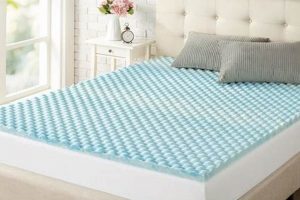
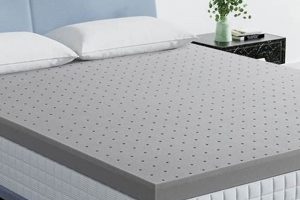
This sleep surface addition is designed to enhance the comfort and support of an existing bed. Typically constructed with encased coils or springs layered within cushioning materials, it’s placed directly atop a mattress to modify its feel. An example includes a unit featuring individually wrapped pocket coils integrated with a memory foam layer, intended to provide a more responsive and contouring sleep experience.
The significance of such an item lies in its potential to revitalize an aging or uncomfortable mattress without requiring complete replacement. The advantages range from improved spinal alignment and pressure point relief to enhanced airflow and temperature regulation, contributing to a more restful night’s sleep. Historically, innovations in bedding have focused on optimizing support and comfort, leading to the development of these supplemental layers as a cost-effective alternative to new mattresses.
Understanding the construction and materials used in these products is essential for making an informed purchase. The following sections will delve into the specific types of coil systems, cushioning materials, and other factors to consider when selecting the appropriate product for individual needs and preferences.
Optimizing Comfort with a Coil-Based Mattress Overlay
The following guidelines provide insights into selecting and utilizing a coil-based mattress overlay to enhance sleep quality and mattress longevity.
Tip 1: Assess Existing Mattress Condition: Prior to purchase, evaluate the current mattress for significant sagging or damage. A coil-based overlay primarily enhances comfort and support, not structural integrity. If the existing mattress is severely compromised, replacement may be a more suitable solution.
Tip 2: Consider Coil Type: Different coil configurations offer varying levels of support and motion isolation. Individually wrapped pocket coils minimize motion transfer, while interconnected coil systems may provide more uniform support across the surface.
Tip 3: Evaluate Material Composition: The surrounding materials, such as memory foam or latex, influence the overall feel. Memory foam conforms closely to the body, while latex offers a more responsive and buoyant sensation. Choose based on preferred comfort levels and support requirements.
Tip 4: Measure Mattress Depth: Accurate measurements of the existing mattress are crucial to ensure proper fit and prevent slippage of the overlay. Consult product specifications for compatible mattress depths.
Tip 5: Prioritize Breathability: Overlays with enhanced airflow, such as those incorporating breathable fabrics or open-cell foam, can help regulate temperature and prevent overheating during sleep.
Tip 6: Check Warranty and Return Policies: Review the manufacturer’s warranty and return policies prior to purchase. This provides recourse in the event of product defects or dissatisfaction with performance.
Tip 7: Factor in Maintenance Requirements: Regular rotation of the overlay can promote even wear and extend its lifespan. Consult manufacturer guidelines for specific cleaning and maintenance recommendations.
By carefully considering these factors, individuals can select a coil-based mattress overlay that effectively enhances comfort, support, and the overall sleep experience.
The subsequent section will explore the diverse range of coil-based mattress overlays currently available, offering a comparative analysis of their features and benefits.
1. Coil Count

Coil count, within the context of a spring mattress topper, refers to the total number of individual coils contained within the topper’s internal structure. A direct correlation exists between coil count and the level of support and contouring provided by the topper. Higher coil counts generally translate to increased support, as the sleeper’s weight is distributed across a greater number of individual springs. This distribution reduces pressure points and contributes to improved spinal alignment. Conversely, a lower coil count may result in less uniform support and a greater potential for sagging over time.
The configuration and type of coils significantly impact the perceived comfort and support. For instance, a topper featuring a high count of individually pocketed coils offers superior motion isolation compared to one with interconnected coils. The pocketed design allows each coil to respond independently to pressure, minimizing the transfer of movement across the surface. As an example, a couple sharing a bed might find a higher coil count topper beneficial in reducing disturbances caused by one partner’s movements during the night. Furthermore, the gauge (thickness) of the coil wire influences firmness; a higher gauge indicates a thinner, more flexible coil, typically found in softer toppers.
Therefore, when selecting a spring mattress topper, coil count should be a primary consideration. While a higher count does not automatically guarantee superior comfort, it generally indicates enhanced support and durability. Understanding the relationship between coil count, coil type, and wire gauge is crucial for choosing a topper that meets individual needs and preferences. Ultimately, this knowledge empowers consumers to make informed decisions that contribute to a more restful and supportive sleep experience.
2. Gauge Strength

Gauge strength, in the context of a spring mattress topper, refers to the thickness of the steel wire used to construct the coils. This attribute directly influences the firmness, durability, and support characteristics of the topper. A lower gauge number indicates a thicker wire, resulting in a firmer and more supportive coil. Conversely, a higher gauge number signifies a thinner wire, which provides a softer and more conforming feel. The gauge strength therefore dictates how the topper responds to weight and pressure, impacting the overall comfort and longevity of the product. For example, individuals seeking robust support, such as those with back pain, may prefer a topper with a lower gauge coil, while side sleepers often benefit from the enhanced pressure relief offered by a higher gauge coil.
The selection of appropriate gauge strength is crucial because it affects the ability of the spring mattress topper to maintain its structural integrity over time. A coil constructed with a thinner, higher gauge wire is more susceptible to deformation and sagging under sustained weight. This can lead to uneven support and a reduction in the topper’s lifespan. Consider a situation where two similar toppers are used under identical conditions: one with a 13-gauge coil and the other with a 15-gauge coil. Over time, the 15-gauge topper is more likely to exhibit compression and a loss of its original shape compared to the 13-gauge topper. This differential in performance underscores the importance of selecting a gauge strength commensurate wi
th the intended user’s weight and sleeping habits.
In summary, gauge strength is a fundamental parameter in determining the performance and durability of a spring mattress topper. Understanding the relationship between gauge number and the resulting firmness and support enables informed purchasing decisions. Choosing the appropriate gauge strength ensures that the topper provides the desired level of comfort and support while maintaining its structural integrity over an extended period. Recognizing the interplay between gauge strength and other factors, such as coil count and material density, allows for a comprehensive assessment of a spring mattress topper’s suitability for individual needs.
3. Material Density
Material density, in the context of a spring mattress topper, is a critical factor influencing its durability, support, and overall comfort. It pertains to the mass of material contained within a specific volume of the toppers constituent components, notably the foam or fiber layers surrounding the spring system. Higher density generally indicates a more robust and resilient product, while lower density suggests a greater susceptibility to compression and degradation over time.
- Foam Density and Support
The density of foam layers directly affects the level of support provided by the spring mattress topper. Higher-density foams, such as high-density memory foam or latex, offer superior resistance to compression, maintaining their shape and providing consistent support for a longer duration. For example, a topper with high-density memory foam will conform to the body’s contours while resisting excessive sinking, promoting proper spinal alignment and pressure relief. Conversely, low-density foams tend to compress easily, leading to a loss of support and potential discomfort.
- Fiber Density and Longevity
In toppers incorporating fiber layers, such as those made from polyester or wool, the density of the fiber fill significantly impacts the topper’s resilience and lifespan. Higher-density fiber fillings resist clumping and matting, preserving the topper’s loft and cushioning properties. A topper with a high-density wool layer, for instance, will retain its shape and provide consistent insulation for a prolonged period compared to a topper with a low-density polyester fill. Lower density fiber fills are prone to shifting and flattening, resulting in uneven support and reduced thermal regulation.
- Impact on Durability
Material density is a key determinant of the overall durability of a spring mattress topper. Higher density materials withstand the rigors of nightly use, resisting compression, tearing, and degradation. A high-density foam encasement surrounding the spring system, for example, will protect the coils from shifting and prevent premature wear. Conversely, lower density materials are more susceptible to damage and compression, leading to a shorter lifespan for the topper. Therefore, selecting a topper with high material densities is crucial for ensuring long-term performance and value.
- Influence on Thermal Regulation
Material density also affects the thermal properties of a spring mattress topper. Higher density materials, particularly foams, can trap more heat, potentially leading to discomfort for sleepers who tend to overheat. However, the specific type of material and its construction can mitigate this effect. For example, open-cell high-density foams allow for greater airflow, dissipating heat and promoting a cooler sleep environment. Lower density materials generally offer better breathability, but may compromise support and durability. Understanding the interplay between material density and thermal regulation is important for choosing a topper that meets individual temperature preferences.
In conclusion, the material density of a spring mattress topper is a multifaceted attribute that significantly influences its performance characteristics. The density of foam and fiber layers directly impacts support, longevity, durability, and thermal regulation. Selecting a topper with appropriate material densities ensures optimal comfort, spinal alignment, and long-term value, enhancing the overall sleep experience. Understanding the relationship between material density and these performance factors empowers consumers to make informed decisions tailored to their specific needs and preferences.
4. Edge Support

Edge support is a critical factor in the performance and longevity of a spring mattress topper. It refers to the structural reinforcement along the perimeter of the topper, designed to prevent sagging and provide consistent support across the entire sleep surface. The effectiveness of edge support directly impacts the usable surface area, comfort, and overall durability of the spring mattress topper.
- Reinforced Perimeters
Reinforced perimeters are commonly implemented through the use of high-density foam encasements or additional coils strategically placed along the edges of the topper. These reinforcements prevent the edges from collapsing under pressure, particularly when sitting or sleeping near the edge of the bed. In the absence of such reinforcement, the edges of the topper may compress prematurely, reducing the usable sleep surface and creating an uneven sleeping plane. The presence of robust reinforced perimeters extends the functional lifespan of the spring mattress topper by preventing edge degradation.
- Usable Surface Area
Effective edge support maximizes the usable surface area of a spring mattress topper. Without adequate edge support, a significant portion of the topper’s surface near the edges becomes unstable and unsuitable for comfortable sleep. This reduction in usable space is especially noticeable for couples sharing a bed, as it restricts their ability to utilize the entire surface comfortably. Spring mattress toppers with robust edge support ensure that sleepers can fully utilize the available space without experiencing a feeling of rolling off the edge.
- Impact on Spinal Alignment
The presence or absence of adequate edge support can significantly impact spinal alignment. A spring mattress topper with weak edge support may cause the sleeper’s body to tilt or slump towards the edge, disrupting proper spinal alignment and potentially leading to discomfort or pain. Conversely, a topper with strong edge support maintains a consistent and level sleeping surface, promoting optimal spinal alignment throughout the night. This consistent support is particularly beneficial for individuals with back or joint pain.
- Long-Term Durability
Edge support contributes significantly to the long-term durability of a spring mattress topper. The edges of a mattress topper are subjected to greater stress and pressure than the central areas, particularly when individuals sit on the edge of the bed or get in and out of bed. Without adequate edge support, these repeated stresses can cause the edges to break down prematurely, shortening the overall lifespan of the topper. Spring mattress toppers with durable edge support structures are better equipped to withstand these stresses, maintaining their shape and support over an extended period.
In conclusion, edge support is an indispensable feature of a spring mattress topper, influencing its usability, comfort
, and longevity. The presence of reinforced perimeters maximizes usable surface area, promotes proper spinal alignment, and enhances long-term durability. When selecting a spring mattress topper, careful consideration of the edge support mechanisms is essential for ensuring a comfortable and supportive sleep experience.
5. Height Profile
The height profile of a spring mattress topper significantly influences its overall impact on comfort, support, and compatibility with existing bedding. It represents the vertical dimension of the topper, extending from its base to its uppermost surface, and directly affects the bed’s total height and feel. Understanding the implications of this dimension is essential when selecting a spring mattress topper.
- Impact on Bed Height and Aesthetics
A spring mattress topper’s height adds to the overall height of the bed. A thicker topper (e.g., 4 inches) will result in a higher bed profile compared to a thinner one (e.g., 2 inches). This affects the ease of getting in and out of bed, particularly for individuals with mobility limitations. Furthermore, the added height may necessitate deeper-pocketed sheets to ensure a proper fit. The aesthetic appeal of the bed may also be influenced by the height profile, affecting the visual harmony of the bedroom.
- Influence on Support and Comfort
Generally, a greater height profile allows for a more substantial layering of materials, potentially enhancing both support and comfort. Thicker spring mattress toppers may incorporate a more complex spring system or thicker comfort layers of memory foam or latex, resulting in improved pressure relief and spinal alignment. However, height alone does not guarantee superior performance; the quality and density of the materials used are equally important. A thicker topper made with low-density materials may not provide the same level of support as a thinner topper constructed with high-quality, dense materials.
- Compatibility with Existing Mattresses
The height profile of a spring mattress topper should be considered in relation to the existing mattress. A topper that is excessively thick may make a soft mattress feel overly plush, while a thinner topper may not provide sufficient change to a firm mattress. It’s vital to assess the current mattress’s firmness and support characteristics to determine the appropriate height profile for the topper. The goal is to achieve a balanced feel that addresses specific comfort needs without compromising support.
- Relationship to Weight Distribution and Pressure Relief
A taller spring mattress topper may offer better weight distribution and pressure relief due to the increased volume of cushioning material. This is especially beneficial for side sleepers, who experience concentrated pressure on their shoulders and hips. A thicker topper can conform more effectively to these pressure points, reducing discomfort and promoting better circulation. However, the effectiveness of weight distribution also depends on the firmness and responsiveness of the spring system and the comfort layers.
In summary, the height profile is a crucial characteristic of a spring mattress topper that significantly influences its comfort, support, aesthetics, and compatibility with existing bedding. The height interacts with other factors, such as material quality, spring system design, and personal preferences, to determine the overall suitability of the topper. Understanding the implications of the height profile empowers informed consumers to select a topper that effectively addresses their specific sleep needs and preferences.
6. Motion Isolation
Motion isolation, a critical performance characteristic in bedding, pertains to the ability of a sleep surface to minimize the transfer of movement from one area to another. Its relevance in the context of a spring mattress topper is particularly significant for couples or individuals sharing a bed, as it directly affects sleep quality and disturbance levels.
- Individual Pocket Coils and Damping
The construction of the spring system within the topper plays a crucial role in motion isolation. Spring mattress toppers utilizing individually pocketed coils demonstrate superior motion isolation compared to those with interconnected coil systems. The independent encasement of each coil allows it to respond selectively to pressure, minimizing the ripple effect that occurs when one area of the bed is disturbed. For example, if one partner shifts positions during the night, the impact on the other partner is significantly reduced due to the localized response of the pocketed coils.
- Material Composition and Vibration Absorption
The materials surrounding the spring system also contribute to motion isolation. Layers of memory foam or latex, often incorporated into the design of spring mattress toppers, possess inherent damping properties. These materials absorb vibrations and dampen the transfer of motion across the surface. For instance, a topper incorporating a layer of high-density memory foam can effectively reduce the propagation of movement, further enhancing motion isolation performance.
- Edge Support Design and Boundary Effect
The design of the edge support system can influence motion isolation, particularly near the perimeter of the bed. A robust edge support structure minimizes the transfer of motion from the edges to the center of the topper. Conversely, a weak or poorly designed edge can act as a conduit for movement, diminishing the overall motion isolation effectiveness. Therefore, a well-constructed spring mattress topper with effective edge support will provide more consistent motion isolation across the entire sleep surface.
- Thickness and Impact Absorption
The overall thickness, or height profile, of the spring mattress topper affects its ability to absorb and dissipate motion. A thicker topper generally offers a greater capacity for cushioning and damping vibrations. A taller topper, with multiple layers of cushioning and supportive materials, can more effectively isolate motion compared to a thinner topper with fewer layers. Thus, the height profile of a spring mattress topper is a relevant factor to consider in the context of motion isolation.
In summary, motion isolation in a spring mattress topper is a multifaceted characteristic influenced by spring system design, material composition, edge support, and topper thickness. Individually pocketed coils, damping materials like memory foam, effective edge support, and increased height all contribute to enhanced motion isolation performance. These factors are critical considerations for individuals seeking to minimize sleep disturbances caused by partner movement or other external forces.
7. Comfort Layer
The uppermost layer of a spring mattress topper, designated the “Comfort Layer,” significantly influences the tactile experience and overall pressure relief provided to the sleeper. Its composition and construction determine the initial sensation experienced upon contact with the sleep surface, playing a v
ital role in perceived comfort.
- Material Composition and Initial Feel
The materials employed in the comfort layer directly dictate the initial feel of the topper. Common materials include memory foam, latex, gel-infused foam, and fiberfill. Memory foam conforms closely to the body, providing contouring support and pressure relief. Latex offers a more responsive and resilient feel. Gel-infused foam aims to regulate temperature by dissipating heat. Fiberfill provides a softer, more plush surface. The choice of material significantly impacts the initial sensation and long-term comfort characteristics of the spring mattress topper. For example, a comfort layer composed of high-density memory foam will offer a cradling sensation, while a latex comfort layer will provide a more buoyant and supportive feel.
- Thickness and Pressure Relief
The thickness of the comfort layer affects its capacity for pressure relief. A thicker comfort layer provides greater cushioning and allows for more significant contouring to the body’s curves. This increased cushioning reduces pressure points, particularly in the shoulders, hips, and knees, contributing to enhanced comfort and reduced pain. A thinner comfort layer may not provide sufficient pressure relief, potentially leading to discomfort or restless sleep. A spring mattress topper designed for side sleepers often features a thicker comfort layer to accommodate the increased pressure experienced in these areas.
- Density and Durability
The density of the materials used in the comfort layer influences its durability and resistance to compression over time. Higher-density materials retain their shape and support for a longer duration, while lower-density materials are more prone to compression and degradation. A comfort layer composed of high-density memory foam or latex will maintain its performance characteristics for an extended period, providing consistent comfort and support. Spring mattress toppers intended for long-term use typically incorporate comfort layers constructed from high-density materials.
- Construction and Airflow
The construction of the comfort layer can impact its breathability and airflow. Open-cell foams and convoluted surfaces promote air circulation, helping to dissipate heat and prevent overheating. A comfort layer with enhanced airflow contributes to a more comfortable sleep environment, particularly for individuals who tend to sleep hot. Conversely, a dense and tightly packed comfort layer may restrict airflow, leading to increased heat retention. Spring mattress toppers designed for temperature regulation often feature comfort layers with open-cell structures or gel infusions to enhance breathability.
In summary, the comfort layer is a critical component of a spring mattress topper, significantly influencing its feel, pressure relief, durability, and thermal properties. The interplay between material composition, thickness, density, and construction determines the overall comfort and performance characteristics of the topper. An informed selection, based on individual needs and preferences, contributes to an enhanced sleep experience.
Frequently Asked Questions
The following addresses common inquiries regarding spring mattress toppers, providing clarity on their function, benefits, and proper usage.
Question 1: What distinguishes a spring mattress topper from a foam mattress topper?
The primary distinction lies in the internal construction. Spring mattress toppers utilize a coil system, similar to a traditional innerspring mattress, to provide support. Foam mattress toppers, conversely, rely on various types of foam, such as memory foam or latex, for support and cushioning.
Question 2: Can a spring mattress topper rectify a significantly sagging mattress?
A spring mattress topper is designed to enhance comfort and provide supplemental support. While it can improve the feel of a slightly sagging mattress, it will not correct significant structural issues. Severely sagging mattresses require replacement for optimal support and spinal alignment.
Question 3: What is the typical lifespan of a spring mattress topper?
The lifespan of a spring mattress topper varies based on construction quality, materials used, and usage patterns. Generally, a well-maintained spring mattress topper can last between three to five years. Regular rotation can prolong its lifespan.
Question 4: Are spring mattress toppers suitable for individuals with back pain?
Spring mattress toppers can provide relief for some individuals with back pain, particularly those seeking increased support. The effectiveness depends on the specific type of back pain and the construction of the topper. Consulting a healthcare professional is recommended for personalized advice.
Question 5: How does one properly clean a spring mattress topper?
Cleaning recommendations vary by manufacturer and materials. Spot cleaning with a mild detergent is generally acceptable. Avoid immersing the topper in water. Professional cleaning may be necessary for extensive stains or soiling. Always consult the manufacturer’s instructions before cleaning.
Question 6: What factors should be considered when selecting a spring mattress topper?
Key considerations include coil count, gauge strength, material density, edge support, height profile, and motion isolation. Assessing individual needs and preferences is essential for making an informed purchasing decision.
The information provided serves as a general guide. Specific product characteristics and manufacturer recommendations should always be prioritized.
The ensuing section will explore the environmental aspects associated with the disposal and recycling of spring mattress toppers.
Concluding Thoughts on Spring Mattress Toppers
This exploration of the spring mattress topper has illuminated its multifaceted nature, encompassing aspects from construction materials and design considerations to performance characteristics and maintenance. The assessment of coil count, gauge strength, material density, edge support, height profile, motion isolation, and comfort layers collectively defines the suitability of a given product for individual needs. Understanding these elements empowers consumers to make informed decisions that impact sleep quality and mattress longevity.
The decision to invest in a spring mattress topper warrants careful consideration of personal preferences, existing mattress conditions, and specific support requirements. A well-chosen topper can significantly enhance the sleep experience; however, improper selection may yield unsatisfactory results. Continued research and adherence to manufacturer guidelines remain crucial for optimizing the benefits and minimizing potential drawbacks associated with spring mattress topper utilization.
![Best Mattress Latex Topper [Guide] Comfort & Support | Organic & Natural Mattress Buyer’s Guide: Non-Toxic Sleep Solutions](https://mattressworldpa.com/wp-content/uploads/2025/07/th-6117-300x200.jpg "Best Mattress Latex Topper [Guide] Comfort & Support Organic & Natural Mattress Buyer’s Guide: Non-Toxic Sleep Solutions")