



These packages represent a convenient and often cost-effective solution for individuals seeking to acquire both a bed frame and a corresponding mattress simultaneously. They typically include a frame, which provides the structural support for the bedding, and a mattress designed to offer comfort and support for sleep. A common example is a platform bed frame paired with a memory foam mattress, sold together at a discounted rate compared to purchasing each item separately.
The significance of these coordinated sets lies in their ability to simplify the purchasing process and potentially offer economic advantages. They eliminate the need to individually select and compare compatible frames and mattresses, saving time and effort. Historically, furniture retailers have offered such pairings to incentivize sales and streamline inventory management, recognizing the complementary nature of these essential bedroom components. The consumer benefits from the ease of acquisition and the assurance that the selected frame and mattress are designed to work well together.
The following sections will delve into the factors to consider when evaluating different options, including frame materials and designs, mattress types and their suitability for various sleep preferences, and the overall impact on sleep quality and bedroom aesthetics. We will also explore how to assess the value proposition of these integrated sets, considering factors such as warranty terms and delivery options.
Tips for Selecting a Bed Frame and Mattress Bundle
Considerations for acquiring a combined bed frame and mattress unit necessitate careful evaluation to ensure optimal sleep quality and long-term value. The following guidance assists in navigating the selection process.
Tip 1: Assess Individual Sleep Needs: Determine preferred sleeping position (side, back, stomach) and any specific support requirements. Different mattress types cater to varying sleep styles; for example, side sleepers often benefit from softer mattresses that contour to the body.
Tip 2: Evaluate Frame Material and Construction: The frame should be constructed from durable materials (e.g., solid wood, metal) and offer adequate support for the mattress. Verify weight capacity specifications to ensure compatibility with the intended users.
Tip 3: Research Mattress Type and Materials: Common mattress types include innerspring, memory foam, latex, and hybrid. Investigate the materials used in construction, focusing on factors such as density, breathability, and hypoallergenic properties.
Tip 4: Verify Compatibility Between Frame and Mattress: Confirm that the chosen mattress dimensions align precisely with the internal dimensions of the bed frame. Incompatibility can lead to inadequate support and premature wear.
Tip 5: Scrutinize Warranty Terms and Return Policies: Thoroughly review the warranty offered for both the frame and the mattress. Pay close attention to coverage details, exclusions, and the process for filing a claim. Also, examine the retailer’s return policy in case the bundle does not meet expectations.
Tip 6: Check for Certifications: Look for certifications such as CertiPUR-US for mattresses, which indicates the foam has been tested for harmful substances and meets specific standards for emissions, content, and durability. This offers some assurance of the product’s safety and quality.
These tips offer a structured approach to choosing appropriate sets. By prioritizing individual sleep needs, assessing material quality, and verifying warranty protections, consumers can make informed decisions that contribute to enhanced rest and overall well-being.
The subsequent sections will provide detailed insights into specific bed frame and mattress characteristics, empowering readers to make confident purchasing choices.
1. Compatibility

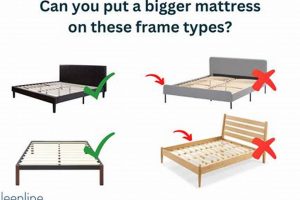
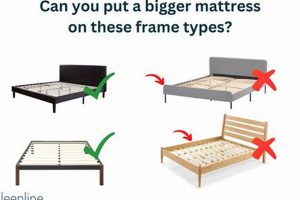
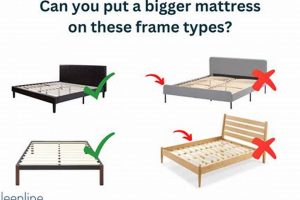
In the context of bed frame and mattress bundles, compatibility refers to the dimensional and structural harmony between the frame and the mattress. A mismatch in these aspects can lead to compromised support, reduced lifespan of both components, and a degraded sleep experience. For instance, a queen-size mattress placed on a full-size frame will lack adequate support, potentially causing sagging and uneven weight distribution. Conversely, a mattress that is too small for the frame may shift and create instability.
Beyond dimensions, structural compatibility is paramount. A lightweight metal frame may not provide sufficient support for a heavy latex mattress, leading to frame damage or premature mattress wear. Similarly, a platform bed frame designed for direct mattress placement may not be suitable for an innerspring mattress that requires a box spring for proper support. Retailers offering these coordinated sets often ensure compatibility through design and materials, but verification remains the consumer’s responsibility. Failure to ensure compatibility can result in voided warranties and the need for costly replacements.
In summary, the practical significance of understanding compatibility cannot be overstated. It directly impacts the structural integrity, comfort, and longevity of the bedding system. While bundles are intended to simplify the purchasing process, consumers should still verify dimensions, weight capacities, and recommended support systems to avoid potential issues and maximize the value of their investment. Neglecting this crucial aspect undermines the core benefit of the bundle, potentially leading to dissatisfaction and unnecessary expense.
2. Materials

The selection of materials in bed frame and mattress bundles critically affects durability, comfort, and overall value. Bed frames commonly employ wood (solid or engineered), metal (steel or aluminum), or upholstered components. Solid wood frames offer aesthetic appeal and structural integrity, while metal frames provide strength and often lower cost. Upholstered frames contribute to a softer aesthetic but may require more maintenance. Mattress materials encompass innerspring coils, memory foam, latex, and hybrid combinations. Each material possesses distinct characteristics influencing support, temperature regulation, and motion isolation. For example, a bundle featuring a solid wood frame and a latex mattress emphasizes durability and natural comfort. The choice of materials directly impacts the longevity and perceived quality of the product, affecting long-term satisfaction.
The interplay between frame and mattress materials is also significant. A heavy-duty metal frame is often paired with a dense memory foam mattress to ensure adequate support and prevent sagging. Conversely, a lightweight platform bed might be better suited for a lighter innerspring or hybrid mattress to avoid exceeding weight capacity. The breathability of mattress materials, such as latex or open-cell memory foam, can mitigate heat retention, improving sleep comfort. Frame materials also influence airflow; slatted bed frames promote better ventilation than solid platform bases. Furthermore, the materials’ hypoallergenic properties are relevant, particularly for individuals with allergies or sensitivities. For instance, natural latex mattresses and solid wood frames are often preferred for their reduced allergen content.
In summary, the consideration of materials in these bundles is a multifaceted process involving evaluation of durability, comfort, support, and potential health impacts. Recognizing the properties of different frame and mattress materials enables informed decision-making, aligning product selection with individual needs and preferences. Ultimately, a well-chosen combination of materials enhances the overall sleep experience and maximizes the lifespan of the bedding investment. Challenges arise when manufacturers prioritize cost over quality, underscoring the importance of thorough research and careful product comparison prior to purchase.
3. Support

Support, within the context of bed frame and mattress bundles, refers to the capacity of the combined system to properly align the sleeper’s spine and distribute body weight evenly. Inadequate support can manifest as back pain, joint stiffness, and disrupted sleep patterns. The bed frame contributes to overall support by providing a stable foundation for the mattress, preventing sagging and ensuring consistent surface firmness. For instance, a platform bed frame offers rigid, uniform support, while a slatted frame distributes weight across multiple points. The mattress, in turn, provides localized support through its internal construction, such as innerspring coils, memory foam layers, or latex cores. The interaction between the frame and mattress dictates the final level of support, impacting postural alignment throughout the night. Without sufficient support, the body compensates, leading to muscular strain and discomfort. A real-life example is an individual with chronic back pain who experiences relief upon switching to a bed frame and mattress bundle specifically designed for orthopedic support. The practical significance lies in promoting long-term spinal health and mitigating sleep-related pain.
Different mattress types offer varying degrees of support tailored to specific sleep positions and body types. Side sleepers often require softer mattresses that contour to the body’s curves, relieving pressure on the shoulders and hips. Back sleepers typically benefit from firmer mattresses that maintain spinal alignment without excessive sinking. Stomach sleepers generally need the firmest support to prevent the spine from arching unnaturally. The frame must complement these mattress characteristics, providing a stable base that does not compromise the mattress’s inherent support properties. For example, pairing a plush memory foam mattress with a flimsy metal frame may result in uneven weight distribution and reduced support. The practical application of this understanding involves carefully considering individual sleep preferences and selecting a bed frame and mattress bundle that addresses those specific needs. An informed consumer should research the support characteristics of both components and assess their compatibility to maximize comfort and minimize the risk of musculoskeletal issues.
In conclusion, support is a critical and multifaceted aspect of bed frame and mattress bundles, encompassing both the frame’s structural integrity and the mattress’s internal construction. The combined system’s ability to properly align the spine and distribute weight determines its overall effectiveness in promoting restful and pain-free sleep. Challenges arise when manufacturers prioritize cost over quality, leading to bundles with inadequate support. The practical significance of understanding support lies in enabling consumers to make informed decisions that prioritize long-term spinal health and sleep quality. Ultimately, a well-chosen bed frame and mattress bundle that provides optimal support represents a worthwhile investment in personal well-being, contributing to improved physical health and enhanced daily functioning.
4. Size
The dimension, or “size,” of bed frame and mattress bundles is a primary consideration, influencing not only comfort but also spatial compatibility within a given bedroom environment. Proper sizing ensures ergonomic alignment and prevents the underutilization or overcrowding of space. The selection of an appropriate size requires a careful evaluation of individual needs, room dimensions, and lifestyle factors.
- Mattress Dimensions and Frame Fit
Accurate matching of mattress dimensions to the corresponding bed frame is paramount. Standard sizes include twin, full, queen, king, and California king, each with specific length and width measurements. A mismatch between mattress and frame size can compromise support, stability, and overall comfort. For instance, a queen-size mattress placed within a full-size frame will lack proper support, leading to potential sagging and an uneven sleep surface. Conversely, a gap between the mattress and frame can create instability and discomfort. Verifying precise dimensional compatibility is essential prior to purchase.
- Room Size and Spatial Constraints
The size of the bedroom dictates the maximum dimensions of the bed frame and mattress bundle that can be accommodated. Overcrowding a small room with an excessively large bed can impede movement and create a sense of claustrophobia. Conversely, placing a small bed in a large room can result in an underutilized and aesthetically unbalanced space. Careful measurement of the room’s dimensions, including consideration of door swing and walkway space, is crucial for selecting an appropriately sized bed. Furthermore, accounting for additional furniture, such as nightstands and dressers, ensures a harmonious and functional arrangement.
- Individual Sleeper Needs and Occupancy
The number of occupants and their individual sleeping habits influence the optimal bed size. A single sleeper may find a full-size or queen-size bed sufficient, while couples generally require a queen-size or king-size bed for adequate personal space. Taller individuals may benefit from a king-size or California king-size bed to accommodate their extended length. Moreover, individuals who tend to move frequently during sleep or prefer to co-sleep with children or pets may require a larger bed to minimize sleep disturbances. Assessing these individual needs and occupancy factors is essential for selecting a bed size that promotes comfortable and restful sleep.
- Storage Considerations and Vertical Space
The overall size of the bed frame can impact the availability of under-bed storage space and the perceived vertical space within the room. Bed frames with low profiles maximize vertical space, creating a more open and airy feel. Conversely, bed frames with elevated platforms offer increased under-bed storage capacity, allowing for the organization of items such as bedding, clothing, or seasonal decorations. The choice between a low-profile or elevated bed frame should consider both aesthetic preferences and practical storage needs. Additionally, the height of the mattress can influence the overall bed height, impacting ease of access and egress, particularly for individuals with mobility limitations.
In summary, the “size” attribute of bed frame and mattress bundles is a multifaceted consideration encompassing dimensional compatibility, spatial constraints, individual needs, and storage considerations. A comprehensive assessment of these factors ensures the selection of an appropriately sized bed that promotes comfort, functionality, and aesthetic harmony within the bedroom environment.
5. Price

Price serves as a primary determinant in the acquisition of bed frame and mattress bundles, influencing consumer decisions based on perceived value and budgetary constraints. The price point often dictates the quality of materials, construction techniques, and included features within the bundle. Higher-priced bundles typically incorporate durable frame materials (e.g., solid wood, reinforced steel) and advanced mattress technologies (e.g., memory foam with cooling gel, individually wrapped coils), leading to increased comfort and longevity. A lower price typically corresponds with less robust materials (e.g., particleboard, basic innerspring systems) and a reduced lifespan. For instance, a bundle priced at $500 may feature a simple metal frame and a thin innerspring mattress suitable for occasional use, while a bundle exceeding $2000 could include a handcrafted solid wood frame and a premium hybrid mattress designed for daily use and orthopedic support. The practical significance lies in understanding the trade-offs between initial cost and long-term performance; a seemingly inexpensive bundle may require more frequent replacement, ultimately costing more over time.
The perceived value of a bed frame and mattress bundle also depends on factors beyond material quality. Brand reputation, warranty terms, and included services (e.g., delivery, setup, old mattress removal) can influence the price-to-value assessment. Bundles from established brands often command a premium due to perceived reliability and customer support. Extended warranties provide added security, mitigating the risk of premature failure or defects. Furthermore, bundled services can justify a higher price point by simplifying the purchasing process and eliminating additional expenses. A consumer comparing two seemingly similar bundles might choose the more expensive option due to its longer warranty period and included delivery and setup, thereby offsetting the initial price difference with long-term cost savings and convenience. Discount retailers often offer low initial prices, but these may be offset by costly shipping fees or limited customer support, requiring careful examination of the total cost of ownership.
In conclusion, price is an essential, yet multifaceted, aspect of bed frame and mattress bundles. It reflects the quality of materials, construction, and included features, while also incorporating brand reputation, warranty terms, and bundled services. The practical challenge lies in discerning true value, balancing upfront cost with long-term performance and considering individual needs and preferences. An informed consumer conducts thorough research, comparing specifications, warranties, and customer reviews across different price points to make a purchasing decision that optimizes value and aligns with budgetary constraints. Prioritizing price alone can lead to dissatisfaction and increased long-term expenses, underscoring the importance of a holistic approach to evaluating bed frame and mattress bundles.
Frequently Asked Questions
This section addresses common inquiries regarding bed frame and mattress bundles, providing detailed explanations to aid in informed decision-making. The information presented aims to clarify uncertainties and facilitate a comprehensive understanding of the considerations involved in selecting these coordinated sets.
Question 1: What constitutes a “bed frame and mattress bundle,” and what are its typical components?
A bed frame and mattress bundle is a pre-selected pairing of a bed frame and a corresponding mattress, offered for sale as a single unit. Typical components include a bed frame (which may be a platform, slatted, or adjustable base) and a mattress (which may be innerspring, memory foam, latex, or hybrid). The bundle is intended to provide a complete sleep system.
Question 2: Are bed frame and mattress bundles more cost-effective than purchasing the components separately?
Generally, purchasing a bed frame and mattress as a bundle is more cost-effective due to discounted pricing offered by retailers to incentivize combined sales. However, a thorough comparison of individual component prices versus the bundle price is recommended to ensure actual cost savings.
Question 3: How does one determine the appropriate mattress firmness within a bed frame and mattress bundle?
Mattress firmness selection depends on individual sleep preferences and physical needs. Side sleepers often benefit from softer mattresses, while back sleepers typically require medium-firm support. Stomach sleepers generally need firmer mattresses. Body weight also influences firmness selection, with heavier individuals often requiring firmer support.
Question 4: What factors should be considered when assessing the durability of a bed frame within a bundle?
Bed frame durability depends on the materials used in its construction. Solid wood and reinforced steel frames are generally more durable than engineered wood or lightweight metal frames. Load-bearing capacity, construction quality, and joint stability are also critical factors.
Question 5: How are warranty claims handled for bed frame and mattress bundles?
Warranty claims for bed frame and mattress bundles are typically handled separately for each component. Consumers should carefully review the warranty terms for both the bed frame and the mattress, noting coverage periods, exclusions, and claim procedures. Contacting the retailer or manufacturer directly is often required to initiate a warranty claim.
Question 6: Can bed frame and mattress bundles be returned if they do not meet expectations?
Return policies for bed frame and mattress bundles vary by retailer. Some retailers offer a trial period with a full refund, while others have more restrictive return policies or charge restocking fees. Reviewing the retailer’s return policy prior to purchase is essential to understand the terms and conditions for returns or exchanges.
In summary, bed frame and mattress bundles offer convenience and potential cost savings, but careful consideration of individual needs, material quality, and retailer policies is necessary for optimal satisfaction. Thorough research and informed decision-making are crucial for maximizing the value of this investment.
The subsequent sections will delve into strategies for maintaining and extending the lifespan of bed frame and mattress bundles, ensuring long-term comfort and support.
Conclusion
This exploration has illuminated the multifaceted considerations surrounding bed frame and mattress bundles. Key points include compatibility, materials, support, size, and price, each impacting the overall value and suitability of the product. A comprehensive understanding of these factors enables informed decision-making, aligning the purchase with individual needs and preferences. Durability, warranty terms, and retailer policies also contribute significantly to the consumer’s experience and long-term satisfaction.
The selection of appropriate bed frame and mattress bundles represents a substantial investment in personal well-being. Prioritizing thorough research, careful evaluation, and objective assessment ensures a positive outcome, contributing to improved sleep quality and enhanced physical health. The implications extend beyond mere comfort; a well-chosen bedding system promotes restorative rest, impacting daily functionality and overall quality of life. Therefore, deliberate and informed purchasing practices are paramount.

![Ultimate King Size Bed Frame with Mattress [Deals] | Organic & Natural Mattress Buyer’s Guide: Non-Toxic Sleep Solutions](https://mattressworldpa.com/wp-content/uploads/2025/07/th-3215-300x200.jpg "Ultimate King Size Bed Frame with Mattress [Deals] Organic & Natural Mattress Buyer’s Guide: Non-Toxic Sleep Solutions")
![Best Queen Frame with Air Mattress [Deals!] | Organic & Natural Mattress Buyer’s Guide: Non-Toxic Sleep Solutions](https://mattressworldpa.com/wp-content/uploads/2025/07/th-3213-300x200.jpg "Best Queen Frame with Air Mattress [Deals!] Organic & Natural Mattress Buyer’s Guide: Non-Toxic Sleep Solutions")